Some products just don’t like being pushed around. No matter how much you try or how careful you are. Shear-sensitive crystals break. Sticky pastes clump and coat the walls. High-viscosity material sits like wet cement around a paddle and barely moves. If you’ve run any of these in the wrong dryer, you know the result: longer cycles and a vessel that takes forever to clean.
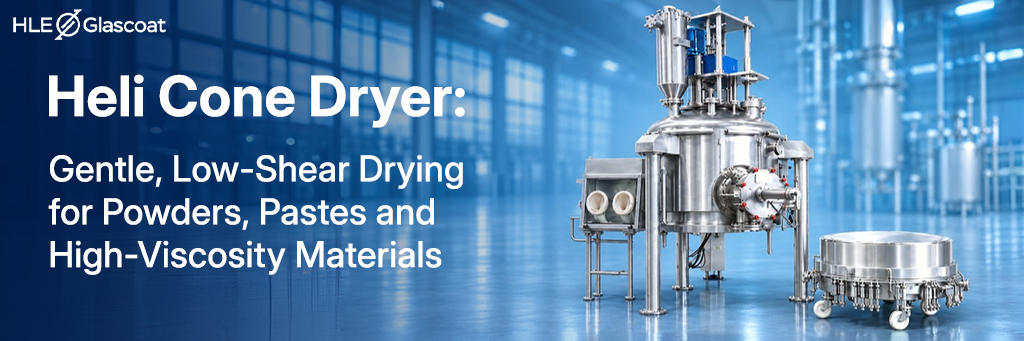
A heli cone dryer (HCD) is built for exactly these materials. It’s a vertical conical vacuum dryer with a heated helix impeller, and it’s designed for gentle, low-speed drying and mixing.
This blog covers how the HCD works, where the optional chopper helps, which materials and industries it suits, and how it compares with other vacuum dryers in HLE Glascoat’s filtration and drying range.
How the Conical Vessel and Heated Helix Impeller Work
The HCD has two main parts that do most of the work.
1. The vertical conical vessel
The vessel is a cone that narrows toward the bottom. That shape does a few useful things at once:
- Gravity helps. Material naturally moves down toward the outlet, so discharge is more complete.
- Fewer dead zones. There are fewer flat corners where product can settle and stay.
- Easier cleaning. A smooth, tapering surface is easier to wash down between batches.
The conical shape and helix design support complete discharge, cleanability and very low residual product. If you run expensive APIs or switch products often, that matters a lot. Eevery gram left behind is either lost yield or a huge cleaning problem.
2. The heated helix impeller and shaft
A helix-shaped impeller runs inside the cone, and both the helix and the shaft are heated.
Why heat the impeller too? Because the jacket isn’t the only heating surface anymore. Heat also reaches the product from the agitator moving through the bed. With thick or pasty materials, that can make a real difference.
The helix turns slowly and lifts and circulates the product gently through the vessel. It doesn’t chop or smash it.
3. The vacuum
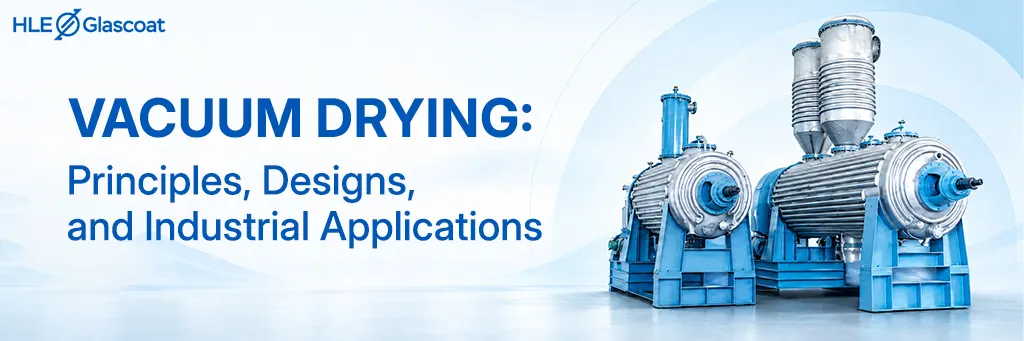
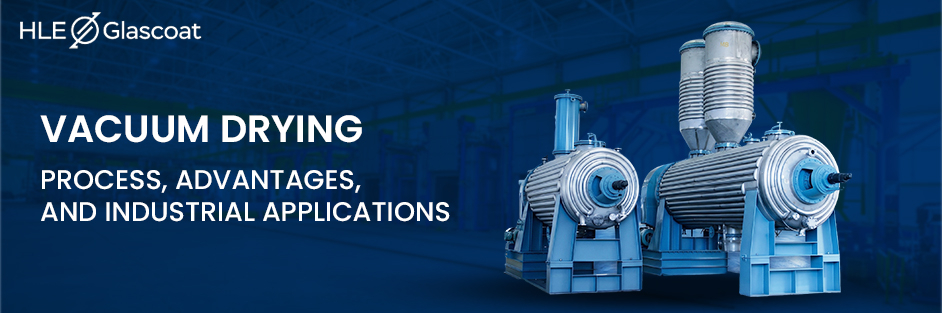
Like any vacuum dryer, the HCD works under reduced pressure. Lower pressure lowers the temperature at which solvents and moisture evaporate, so you can dry at lower product temperatures. That’s useful for heat-sensitive materials. (For a detailed explanation, see our previous blog: vacuum drying processes and applications.)
Low-Shear Mixing and the Optional Chopper
This is the main reason to choose an HCD.
What “low-shear” actually means
Shear is the tearing and grinding force a moving agitator puts on particles. Some processes want it, because it helps break up lumps and disperse material.
But plenty of products are damaged by it:
- Crystals can fracture, changing particle size distribution
- Fragile granules can break down into dust
- Some APIs can see changes in physical form or bulk properties
The HCD’s helix runs at low speed with low-shear mixing. You get circulation and heat transfer without much mechanical stress on the particles.
Where the chopper comes in
As some materials dry, they pass through a sticky “paste phase” and can form lumps. Gentle mixing alone won’t always break those up.
That’s what the optional chopper is for. It’s a separate, faster-moving element that breaks lumps and agglomerates when needed. In practice:
- Leave it off when product integrity matters most
- Use it when lumps form and you need a more uniform, free-flowing powder
So you get gentle handling most of the time, plus a way to deal with lumps when they appear. Whether you need the chopper depends on how your product behaves during drying.
Materials and Industries Suited to an HCD
HLE’s HCD brochure lists four main material types:
| Material type | Why an HCD suits it |
| Powders | Gentle circulation keeps particles intact while drying |
| Suspensions | Helix keeps solids moving so they don’t settle and cake |
| Pastes | Heated helix adds heat-transfer surface inside thick material |
| High-viscosity materials | Slow, strong helix movement handles heavy loads without high shear |
Industries that typically consider an HCD
- Pharmaceuticals and APIs: shear-sensitive and heat-sensitive products, plus strict cleaning needs
- Speciality chemicals: pastes and viscous intermediates
- Agrochemicals: wet cakes and slurries that need low-temperature drying
- Food, paints, dyes and pigments: products where particle form and colour consistency matter
One note: these are typical fits, not guarantees. Your actual product, its solvent, moisture content, stickiness and heat sensitivity, decides whether an HCD is right.
HCD vs Other Vacuum Dryers
Vacuum dryers aren’t interchangeable. Each design moves product differently, and that changes the result.
| Dryer | Vessel and agitation | Best suited for | Key consideration |
| Heli Cone Dryer (HCD) | Vertical cone, heated helix impeller, optional chopper | Shear-sensitive powders, pastes, suspensions, high-viscosity material | Gentle handling, low residue, good cleanability |
| Rotary Vacuum Paddle Dryer (RVPD) | Horizontal cylinder, hollow-shaft paddle agitator | Batch drying of wet cake or solution, solvent recovery | Strong tumbling and heat transfer; more mechanical action on product |
| Agitated Nutsche Filter-Dryer (ANFD) | Enclosed vessel with filter plate and agitator | Filtration, washing, re-slurrying and drying in one charge | Best when you also need filtration, not just drying |
| Glass-Lined RCVD | Whole conical vessel rotates and tumbles | Free-flowing materials in corrosive service | No internal agitator; may struggle with sticky pastes |
| Orbicular Dryer | Spherical vessel, lower half opens | Sensitive pharma products with demanding cleaning | Interior access and CIP/SIP features |
A quick way to decide
- Choose an HCD if your product is shear-sensitive, pasty or viscous, and you want low residual product
- Choose an RVPD if you need high heat transfer and strong tumbling for wet cake, and particle damage isn’t a major concern
- Choose an ANFD if filtration and drying should happen in the same vessel
- Choose an RCVD if your material flows freely and you need glass-lined corrosion resistance
It’s surprisingly common for plants to pick a dryer based on what they already run, and then spend months fighting product quality. The selection should always start with the material.
Find the Right Dryer for Your Material
A heli cone dryer makes the most sense when your product needs gentle handling and you can’t afford high residue or long cleaning cycles. If your material is free-flowing and robust, another vacuum dryer may do the job just as well.
The safest way to decide is to look at your actual material and process conditions. Contact HLE Glascoat’s Filtration and Drying team to discuss your application and find out whether an HCD is the right fit.
Frequently Asked Questions
What is a heli cone dryer used for?
A heli cone dryer is used for gentle vacuum drying and mixing of powders, suspensions, pastes and high-viscosity materials, especially products that are sensitive to shear.
Why is the helix impeller heated?
Heating the helix and shaft adds heating surface inside the product, not just at the vessel wall. That helps when drying thick materials that transfer heat slowly.
Do I always need the chopper?
No. The chopper is optional. It’s useful when lumps form during drying, but you can leave it off when particle integrity is the priority.
Is an HCD suitable for pharmaceutical use?
HLE’s HCD design supports cleanability and very low residual product, which are important in pharma. Suitability still depends on your product, cleaning procedure and validation requirements.
How is an HCD different from an RCVD?
In an RCVD, the whole vessel rotates. In an HCD, the vessel is fixed and a heated helix moves the product, which gives more control with pasty or viscous material.