
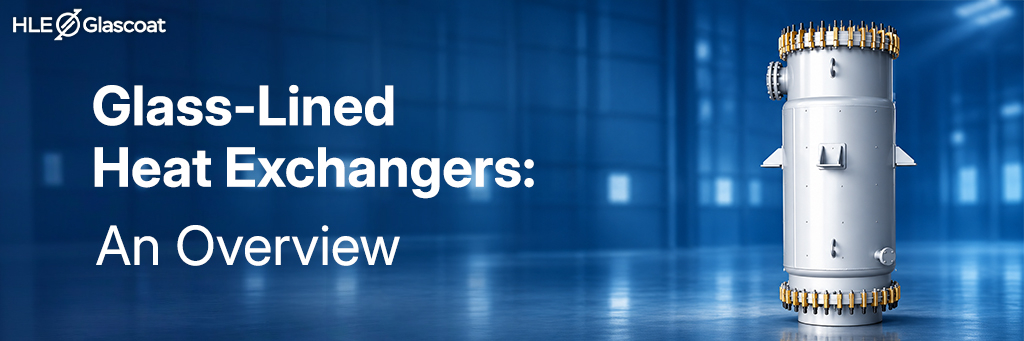
Glass-Lined Heat Exchangers: An Overview
Heat exchangers transfer heat between process and utility streams. Where glass-lined equipment is required, the exchanger design and process-contact surfaces must be selected for the application. HLE Glascoat’s official company materials describe glass-lined heat exchangers in shell-in-shell and plate-type constructions.
What Is a Glass-Lined Heat Exchanger?
A glass-lined heat exchanger uses glass-lined surfaces in a heat-transfer equipment design. The selected construction must match the process medium, utility conditions and the required heat-transfer duty. Equipment suitability should be established using the product documentation for the proposed model.
HLE Glascoat Heat Exchanger Designs
Shell-in-Shell Design
HLE’s official company materials identify shell-in-shell glass-lined heat exchangers as part of its product range. This design is considered for applications where the specified process and utility streams require the appropriate glass-lined construction. The arrangement and operating limits must be confirmed for the selected model.
Plate-Type Design
HLE’s official company materials also identify plate-type glass-lined heat exchangers. The suitable configuration depends on the required duty and the equipment specification supplied by HLE.
Selection Considerations
Heat exchanger selection requires a clear understanding of the intended process and utility conditions. The following checks should be completed with reference to HLE’s official product information:
- Define the required heat-transfer duty and the process streams involved.
- Confirm the appropriate heat exchanger construction for the application.
- Check the model-specific design data and operating limits.
- Confirm material compatibility and any process-specific requirements with HLE.
Glass-Lined Equipment for Corrosive Duties
HLE positions its glass-lined equipment for applications involving corrosive process requirements. However, chemical compatibility and operating suitability should not be assumed from the product category alone. The process medium, glass type and equipment design conditions must be reviewed together.
Frequently Asked Questions
Q: Which glass-lined heat exchanger designs does HLE Glascoat list?
A: HLE’s official company materials identify shell-in-shell and plate-type glass-lined heat exchangers.
Q: How do I select the right design?
A: Define the process and utility streams, required duty and operating conditions, then confirm the appropriate design and model-specific specifications with HLE.
Q: Can I assume that a glass-lined heat exchanger is suitable for any corrosive chemical?
A: No. Chemical compatibility must be confirmed for the actual process medium, glass type and operating conditions.
Contact HLE Glascoat to discuss the application and confirm the suitable glass-lined heat exchanger design.