
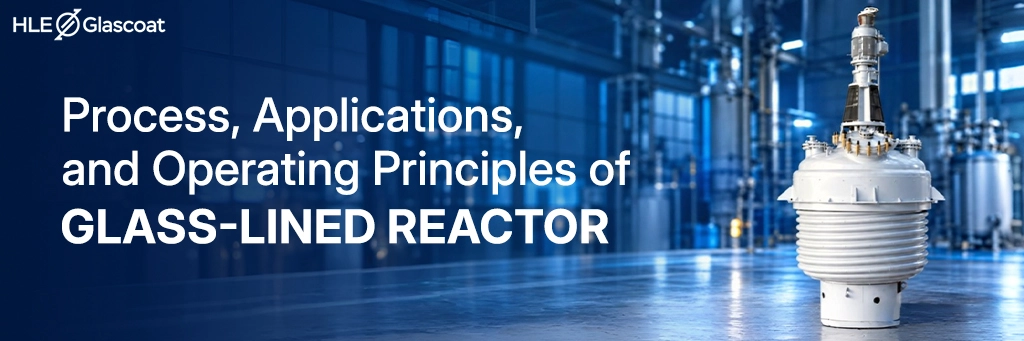
Process, Applications, and Operating Principles of Glass-Lined Reactors
Glass-lined reactors are used in industrial processes where vessel construction, process-contact material and
equipment configuration must match the application. HLE Glascoat’s official company materials describe a range of glass-lined reactors and other equipment for storage, reaction and heat-transfer duties.
How a Glass-Lined Reactor Is Constructed
A glass-lined reactor combines a steel vessel with a glass lining on the process-contact surface. The steel shell provides the vessel structure, while the glass lining provides the surface selected for the process. The suitability of a particular glass type depends on the chemicals and operating conditions involved.
Understanding the Process Requirements
A reactor specification begins with the process duty and the materials to be handled. The required capacity, configuration, glass type and design conditions should be confirmed against HLE’s current product documentation. Operating instructions and limits must be taken from the documentation for the specific equipment supplied.
Mixing and Reaction Duties
The reactor configuration should be selected to match the intended process. HLE’s official product portfolio includes glass-lined reactors for chemical and allied industries. The appropriate vessel and internal arrangement should be confirmed with HLE for the intended material and process.
Temperature and Other Design Conditions
Temperature, pressure and chemical compatibility are equipment-specific design considerations. This article does not prescribe operating limits because those limits must be confirmed from the applicable HLE documentation for the selected reactor and glass type.
Product Range
HLE’s official company materials describe glass-lined reactors conforming to DIN 28136, with capacities spanning 63 to 50,000 litres. HLE also identifies GEL2201 as a special pharmaceutical glass used in cGMP glass-lined reactor models.
Applications and Equipment Selection
HLE Glascoat supplies glass-lined equipment for chemical and allied industries. To select a suitable reactor, define the process duty, material, required capacity and operating conditions, then confirm the proposed configuration and glass type with HLE.
Important Selection Checks
- Confirm the required reactor capacity and configuration.
- Verify material compatibility with the selected glass type.
- Obtain the applicable design limits and operating instructions from the specific HLE equipment documentation.
- Follow the inspection, operation, cleaning and maintenance procedures provided for the equipment supplied.
Frequently Asked Questions
Q: Can the same reactor specification be used for every process?
A: No. The appropriate configuration and glass type depend on the process material, required capacity and equipment design conditions.
Q: Where can I confirm the operating limits?
A: Use the technical documentation applicable to the specific HLE reactor model and consult HLE Glascoat for clarification.
Q: What capacity range does HLE list for glass-lined reactors?
A: HLE’s official company materials describe a range spanning 63 to 50,000 litres.
Discuss the process duty and equipment requirements with HLE Glascoat before finalising a reactor specification.